Bedding · Materials & comfort
Wool Mattress Toppers and Pads: What Their Construction Means for Comfort
Wool bedding has an understated appeal: a natural fiber, a softly cushioned surface, and a reputation for helping manage warmth and moisture. But a wool mattress pad and a wool mattress topper are not interchangeable by default. Their fill, quilting, thickness, attachment and care instructions all influence how they feel—and what they can realistically do for your bed.
Published November 16, 2026
Think of a bed as a composition of layers. The mattress provides the principal support; sheets and protectors add a fine, functional finish; and a pad or topper can alter the surface in a more noticeable way. Wool may appear in either of those last two roles. In one construction it forms a relatively light, quilted layer intended to add a little softness and protect the mattress from everyday wear. In another, a deeper quantity of wool is held inside a generously proportioned casing to create more discernible cushioning.
That distinction matters. A product called a “wool mattress pad” may be designed primarily as a washable or protective bedding layer, while a “wool mattress topper” may be intended to change the feel of a mattress. Yet names are not perfectly standardized across the bedding market. The specifications—especially fill, finished height, quilting and care—offer a more reliable guide than the label alone.
Pad or topper: start with the job you want done
A mattress pad is usually a comparatively modest layer. It may add a touch of cushioning, help shield the sleep surface from sweat and routine wear, or offer a different textile feel beneath the sheet. A pad can be a sensible choice when the mattress already feels comfortable and the goal is a small adjustment rather than a dramatic transformation.
A topper is generally more substantial. Its purpose is to make a more noticeable change to surface comfort, whether by adding softness, easing the impression of a firm mattress or creating a loftier feel. Wool toppers range in construction, so the word “topper” does not guarantee a particular degree of plushness. Look for the stated thickness and the amount and type of fill, then consider how those details relate to your existing mattress.
Neither layer can correct every mattress problem. A pad or topper may refine the feel of a sound mattress, but it cannot restore a sagging support core or reliably solve a mattress that is badly worn. It is useful to separate a surface-comfort concern from a support problem before choosing an added layer.
How wool behaves in a sleep layer
Wool fibers can absorb and release moisture vapor, a quality that helps explain their place in bedding. Rather than creating a waterproof barrier, wool can help manage moisture near the body and contribute to a drier-feeling sleep environment. Its natural structure also traps air, providing insulation while allowing bedding to feel less sealed-in than some dense, heat-retaining layers.
These properties are often described as temperature regulation. That phrase should be understood as a potential comfort benefit, not a promise that wool will keep every sleeper at one ideal temperature. Room conditions, pajamas, sheets, mattress materials, sleep habits and individual sensitivity all influence how warm or cool a person feels. A wool layer may suit someone seeking a breathable, moisture-managing surface, but it cannot guarantee freedom from overheating or night sweats.
Wool also has a particular tactile character. Depending on the casing and quilting, it may feel springy, softly padded, or relatively restrained under a fitted sheet. The fiber itself is enclosed in a fabric shell, so the outer material has an important role in the experience. Cotton covers, for example, can contribute a familiar, breathable handfeel; the quality and weave of the casing can also affect how the filling moves and how the surface sits.
Fill, quilting and thickness: the details that shape comfort
Fill tells you what is doing the cushioning
Read the material description closely. A product may use 100% wool, a wool blend, or wool batting within a layered construction. The quantity of fill, when disclosed, can help distinguish a substantial comfort layer from a light pad. If a listing provides no fill weight, look for a clear finished thickness and ask the maker for details rather than assuming that “wool-filled” means especially lofty.
Wool fill is not the same as a thick foam layer. It tends to provide a more gently resilient, textile-like cushion rather than the deep contouring associated with some foams. That difference is neither inherently better nor worse; it is a matter of the feel you want. A sleeper seeking pronounced body-conforming pressure relief may prefer a different material or a more substantial construction, while someone looking for modest cushioning and natural-fiber comfort may appreciate wool’s distinct response.
Quilting holds the layer together
Quilting secures the fill within the cover and influences how evenly it stays distributed. Stitching patterns, tufting and channel designs can create different surface profiles and affect whether the material shifts over time. Closely controlled quilting can help limit bunching, but construction details vary, and normal use can still gradually compress natural filling.
Notice whether the product is quilted throughout, hand-tufted, or divided into stitched sections. A well-described construction should make it clear how the wool is held in place. If the product is intended for frequent repositioning or will be used on an adjustable bed, secure attachment and flexibility deserve extra attention.
Thickness is useful—but not the whole story
Finished height gives a practical sense of scale. A one-inch layer will generally have a subtler effect than a topper described as approximately three inches high, though the exact feel also depends on fill density and quilting. Consider the height of your mattress as well: adding a thick topper may require deeper-pocket sheets and can affect how securely a mattress protector or fitted sheet sits.
Thickness should not be treated as a direct measure of support or durability. A lofty layer may feel inviting at first, but its long-term performance depends on fiber quality, construction, care and use. Conversely, a thinner pad may be precisely right if your aim is to preserve the mattress’s existing feel while adding a natural-fiber surface.
The fit: a small practical detail with a big effect
Measure the mattress before ordering. Confirm its length, width and depth, including any existing topper or encasement that will remain beneath the new layer. A mattress topper that is too small can leave the edges exposed; one that is too large may wrinkle or overhang. Either can make the bed feel less composed and the fitted sheet more difficult to manage.
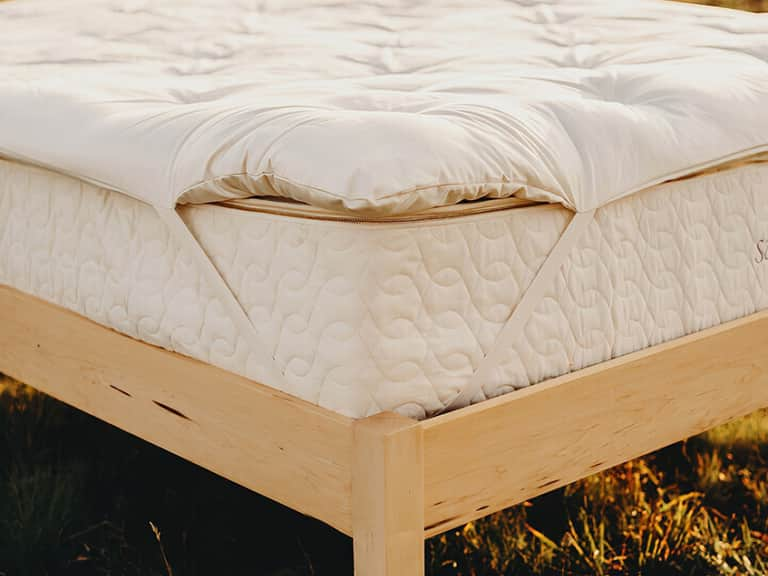
Look at the attachment method. Corner straps can help secure a topper to the mattress, while fitted-skirt designs may wrap around its sides. Some pads simply rest on the surface and are held in place by the sheet. Straps can be helpful for sleepers who move around or for a topper that might otherwise drift, but the depth and shape of the mattress determine whether the fastening will work well.
If the bed is adjustable, check whether the product is suitable for movement and whether the attachment system will stay secure as the base changes position. For a foldaway mattress or a bed that is regularly put away, bulk and flexibility matter too: a thick, heavy layer may be inconvenient to fold or store. Before combining layers, check the care instructions and make sure the arrangement does not prevent proper ventilation.
A closer look at wool product types
Product descriptions illustrate how much the category can vary. The Savvy Rest Natural Savvy Woolsy Mattress Topper is described as a more substantial wool-filled topper, with a quilted certified organic cotton cover, corner straps and an approximately three-inch total height. Those details position it differently from a light mattress pad: the stated height and generous fill suggest a more noticeable comfort layer. Its listing also recommends using an organic mattress pad over the topper to help protect both the wool layer and mattress from stains and perspiration.
By contrast, a wool-filled mattress pad is typically considered when a sleeper wants a more modest layer. The DownTown Company Wool-Filled Mattress Pad is described with a quilted cotton jersey cover, Merino wool fill and elastic corner bands. Its construction emphasizes a breathable, fitted layer rather than a stated, deep topper profile. It is listed as requiring dry cleaning, a significant consideration for anyone who prefers to wash bedding at home.
Care can differ even among wool products, so do not infer washability from the fiber alone. For instance, the Washable Wool Filled Mattress Pad is described as using a wool blend with an organic cotton shell and as being designed for machine washing. That is a distinct practical proposition from a wool pad that must be professionally cleaned. Compare the actual care label and manufacturer instructions before purchase, especially if the layer will be used in a home with children, pets or frequent spills.
Care: protect the fiber and the shape
Wool is not a single care category. Some wool bedding is washable, some calls for spot cleaning, and some should be dry cleaned. Follow the instructions supplied for the particular product. A washing method that is suitable for one wool blend or construction may cause shrinkage, felting, distortion or damage to another.
Using a removable mattress protector or washable pad above a wool topper can reduce the need to clean the larger, more delicate layer. That extra barrier is practical, but it should not be assumed to be waterproof unless its specifications say so. A breathable protector may help guard against ordinary soil while preserving more of the surface feel; a waterproof protector offers a different kind of protection and can have its own effect on airflow and handfeel.
Allow bedding to air when appropriate, and avoid storing a damp wool layer. If the topper needs to be moved, support it evenly rather than pulling at one corner or dragging it across the floor. For seasonal storage, make sure it is clean and fully dry, then store it in a dry, ventilated place according to the maker’s guidance. Avoid compressing it for long periods unless the manufacturer explicitly permits that approach.
Regularly inspect straps, seams and quilting. Early signs of shifting fill or a loose fastening are easier to address before they affect the whole surface. Gentle, consistent care is generally more useful than aggressive cleaning: wool layers are designed for comfort, not to serve as a substitute for a washable sheet or a spill-proof cover.
Who might prefer a wool pad—and who might choose a topper?
A wool pad may be a good fit if you are already satisfied with your mattress and want a comparatively subtle layer with natural-fiber characteristics. It can also suit someone who values a lower-profile addition, needs a secure fitted design, or wants a less dramatic change in the bed’s feel. The right choice depends on the product’s fill, thickness, cover and care instructions—not simply the word “pad.”
A wool topper is worth considering if the mattress feels a little too firm at the surface and you want more cushioning without replacing the bed. A deeper, well-secured construction is more likely to make a noticeable difference than a thin pad, though the change will remain specific to that product and the mattress beneath it. If the mattress is already soft, a substantial topper could make the bed feel too yielding or raise its overall height more than you prefer.
For people with wool sensitivity or known material allergies, read the full material description and consult a qualified health professional if you are unsure. Labels such as “natural,” “antimicrobial” or “hypoallergenic” are not a substitute for an individual assessment. Organic certifications may provide information about particular materials or processing standards, but they do not guarantee that a product will suit every sleeper.
A measured way to choose
Before settling on a product, describe the problem you want to solve in plain terms. Is the bed too firm at the surface? Do you want a touch of cushioning, better moisture management, or a protective textile layer? Is the current mattress comfortable but in need of a fresher surface? Each answer points toward a different construction.
A concise selection checklist
- Check whether the layer is intended primarily for protection or for a more noticeable comfort change.
- Compare wool content, fill amount if provided, quilting method and finished thickness.
- Measure mattress size and depth, and confirm how the product attaches.
- Consider whether your fitted sheets will accommodate the added height.
- Read the precise care instructions; washable and dry-clean-only products suit different routines.
- Think about storage, adjustability and how often the layer will need to be moved.
The most satisfying wool bedding choice is rarely the one with the most elaborate promise. It is the one whose construction matches the job. A quilted pad can add a considered finishing layer; a deeper topper can change the surface more substantially. Wool’s moisture-managing and insulating qualities may make either appealing, but the final experience depends on the whole arrangement: mattress, fill, cover, sheet, room and sleeper.
Read the specifications with the same attention you would give a well-made garment. Look beyond the name, feel out the intended role, and make room for care as part of the decision. When thickness, attachment and maintenance are in harmony with your bed and your habits, wool can be a quietly useful way to refine the sleep surface—one thoughtful layer at a time.